
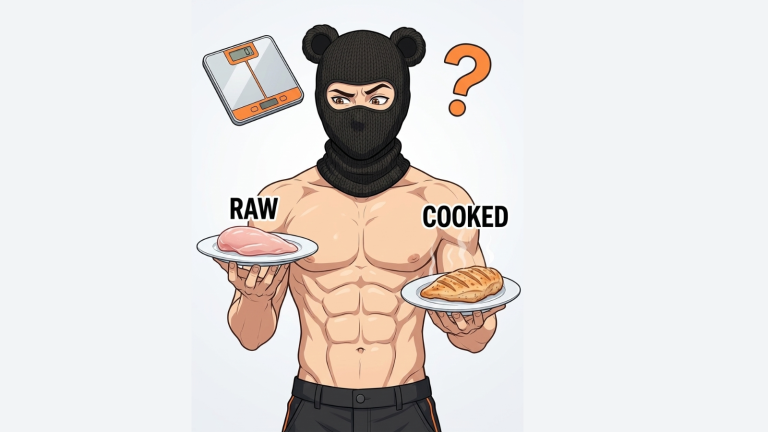
If you’re tracking calories to gain muscle or lose fat, you’ve probably wondered whether you should weigh food raw or cooked.
This is one of the most common questions beginners have when they start tracking calories. Many people buy a kitchen scale and begin weighing their food, but quickly realize something confusing: the weight of food changes after cooking.
For example, chicken breast loses water when cooked, while foods like rice, dal and oats absorb water and become heavier. Because of this, the same food can have very different weights depending on whether it’s raw or cooked.
Understanding the correct way to weigh food will help you track calories more accurately and stay consistent with your nutrition goals whether it be to gain weight or lose fat.
In this guide, you’ll learn:
-
- Whether you should weigh food raw or cooked
-
- Why food weight changes after cooking
-
- The best method for accurate calorie tracking
-
- How to stay consistent when tracking your meals
Why Food Weight Changes After Cooking
When food is cooked, its weight often changes due to water loss or absorption.
For example:
-
- Chicken, mutton, and fish lose water during cooking, so they weigh less after being cooked.
-
- Rice, dal and soya chunks absorb water, which makes them weigh more after cooking.
Let’s look at a simple example.
A 200 g raw chicken breast may weigh around 140–150 g after cooking, depending on how it’s prepared.
However, the calories remain the same because cooking only changes the water content, not the actual energy or macros in the food.
This is where many beginners get confused when tracking calories.
Should You Weigh Food Raw or Cooked?
The simplest and most accurate method is:
Weigh your food raw whenever possible.
Because you don’t know how much water, oil or gravy is used in the already cooked food.
Most nutrition databases and food labels list calories for raw ingredients, which makes tracking easier and more consistent.
For example:
A nutrition database may list:
Chicken breast (raw)
120 calories per 100 g
If you weigh 200 g raw chicken, you know it contains about 240 calories.
If you weigh it after cooking, the weight may change, which can make calorie tracking less straightforward.
When It’s Okay to Weigh Food Cooked
In some situations, weighing food cooked is more practical.
For example:
-
- When eating leftovers
-
- When someone else cooks the meal
-
- When measuring foods like rice or pasta after cooking
In these cases, you can still track calories as long as you use nutrition data that matches the cooked version of the food.
Nutrition databases often list values for both raw and cooked foods. You can check detailed nutrition data in the USDA FoodData Central database.
The key is simply being consistent with the method you use.
Consistency Matters More Than Perfection
Many beginners worry about tracking calories perfectly, but the most important factor is consistency over time.
If you sometimes weigh food raw and other times cooked, your calorie tracking may become inconsistent.
Instead, choose one method and stick with it.
For most people, the easiest approach is:
Weigh foods raw when cooking meals yourself.
This keeps calorie tracking simple and avoids unnecessary confusion.
Over time, you’ll also become better at estimating portions and understanding how much you’re actually eating.
Using a Kitchen Scale for Accurate Tracking
A kitchen scale is one of the most useful tools for tracking calories.
Instead of guessing portion sizes, you can measure exactly how much food you’re eating.
For example:
Instead of estimating:
“About one cup of rice”
You can measure
“150 g cooked rice”
Its better to use numbers then eyeballing measuring cups.
This makes your calorie tracking much more accurate.
Example of Raw vs Cooked Food Weighing
Let’s look at another example using rice.
Rice gains water during cooking, which increases its weight.
For example:
But the calories remain the same because the extra weight comes from water.
So if you track 100 g raw rice, you don’t need to worry about the weight change after cooking.
This is another reason why weighing food raw is often easier when tracking calories.
Final Thoughts
If you’re wondering whether you should weigh food raw or cooked, the simplest rule is to weigh foods raw whenever possible.
Raw measurements match most nutrition databases and make calorie tracking easier and more consistent.
However, weighing food cooked can still work as long as you use the correct nutrition data and stay consistent with your method.
By learning how to track calories properly and measuring your food accurately, you can make much better progress toward your fitness goals whether it be if you are trying to gain muscle, lose fat, or maintain your weight. If you’re unsure how many calories you should be eating to build muscle, you can read my guide on how many calories a skinny beginner should eat to gain muscle.